When your child has a food allergy, the hard part often isn’t one big decision. It’s the hundred small ones every week: is this brand still safe, what goes in tomorrow’s lunchbox, did anyone tell the party host? A simple written routine takes that weight off your memory and makes it easy to share with everyone who feeds your child.
Here is a calm, practical way to organise family meals, step by step.
This article is about organisation, not medical advice. Always follow the care plan from your child’s doctor or allergist.
1. Start with one clear child profile
Put everything in one place: the allergies your doctor has confirmed, the doctor’s or allergist’s contact details, two emergency contacts and where the care plan is kept. Keep it in the kitchen, and give a copy to anyone who looks after your child. The same profile also belongs in your family emergency binder, so other adults can find it in a hurry.
2. Know the 14 allergens on labels
In the UK and the EU, food businesses must declare 14 allergens: celery, cereals containing gluten, crustaceans, eggs, fish, lupin, milk, molluscs, mustard, tree nuts, peanuts, sesame, soya, and sulphur dioxide and sulphites. They are highlighted in the ingredients list of pre-packed food, and restaurants have to be able to tell you about them. The Food Standards Agency explains the rules in more detail.
Mark which ones apply to your child, plus any other foods your doctor has asked you to avoid.
3. Plan the week in one sitting
Pick a regular moment, for example Sunday afternoon, and fill in breakfast, lunch, snack and dinner for each day. Two tips make this much easier:
- Build a list of “trusted meals”. These are dishes your family already makes with confidence. Rotating 10–15 of them saves a lot of thinking.
- Add a “changes needed” column. If the rest of the family eats something different, write down the swap so nobody has to improvise at 6 pm.
4. Shop with a “label checked” habit
Manufacturers change recipes. A product that was fine last month may not be today. Use a shopping list with two boxes per item, “bought” and “label checked”, and tick the second one only after you have read the label in the shop or at home. It sounds small, but it turns checking into a habit instead of a worry.
Keep a list of your usual products with the date you last checked each label, so you know when it’s time to look again.
5. Get snacks and lunchboxes ready ahead
Plan the week’s snacks and packed lunches at the same time as the main meals. Then write down your school’s rules (food sharing, banned items, who the school nurse is) so they’re in front of you when you pack the bag.
6. Give other adults what they need
Teachers, childminders, grandparents and party hosts want to help, but they need clear information. A short sheet for school or nursery, and a small card that says “My child has food allergies, please don’t give them any food without checking with me first”, make the conversation easier.
Before a party or visit, ask about the menu, bring a snack your child likes, and make sure the adults know who to call.
7. Keep a simple meal and reaction diary
Write down what was eaten and anything you noticed. You can take the diary to appointments along with your questions for the doctor. It isn’t for diagnosing anything yourself. It just helps you remember the details when you need them.
Want it all ready to print?
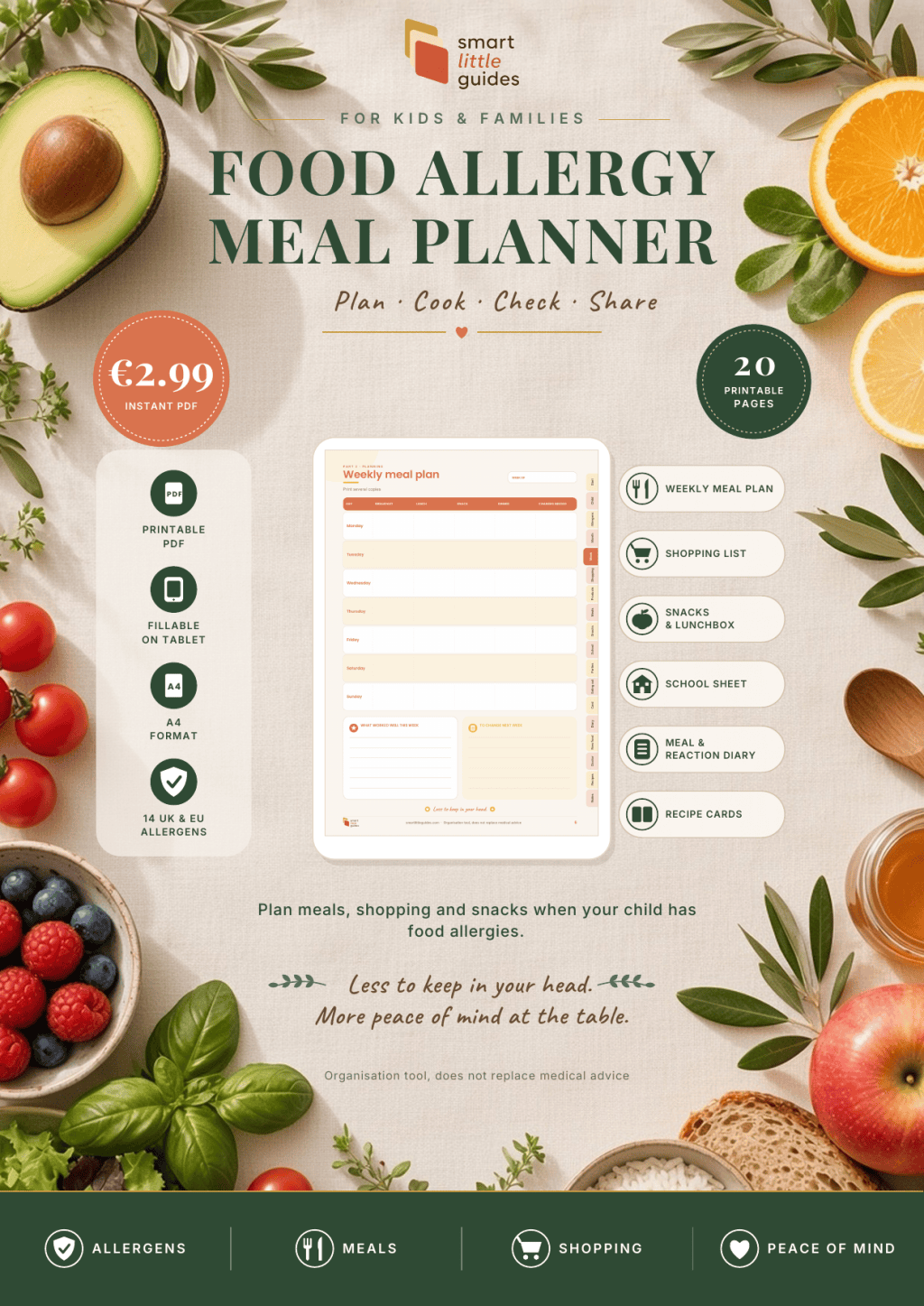
We put this whole routine into the Food Allergy Meal Planner for Kids & Families: 20 printable A4 pages that you can also fill in on a tablet. It includes the child profile, the 14-allergen checklist, a weekly meal plan, a shopping list with “label checked” boxes, snacks and lunchbox planning, a school information sheet, communication cards, a meal and reaction diary and recipe cards.
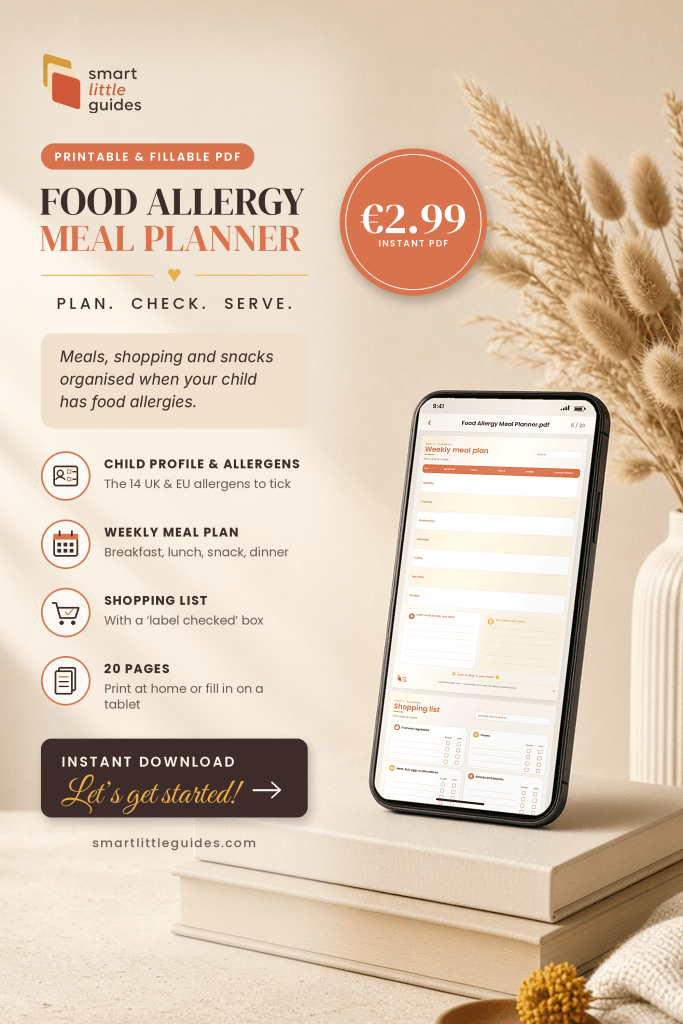
Get the Food Allergy Meal Planner – €2.99 →
Quick checklist
- One child profile, kept in the kitchen
- The 14 allergens ticked for your child
- A weekly plan built from trusted meals
- Every label checked, every time
- School and party information shared in writing
- A diary to take to appointments
Disclaimer: Smart Little Guides planners are organisation tools. They do not replace medical advice and cannot guarantee that any product is free from allergens. If you have any concerns about your child’s health, speak to your GP, allergist or call your local emergency number. More information: NHS – Food allergy. Read more about Smart Little Guides if you want to know who makes these pages.


Leave a Reply