Friendly heads-up: this guide contains affiliate links. If you buy through them, Smart Little Guides may earn a small commission, at no extra cost to you.
Here is something most of us were never told in childhood piano lessons: a huge number of the songs you love are built on just a handful of chords. Learn a few hand shapes and one or two rhythms, and you can sit down and accompany a song long before you can read a full page of sheet music.
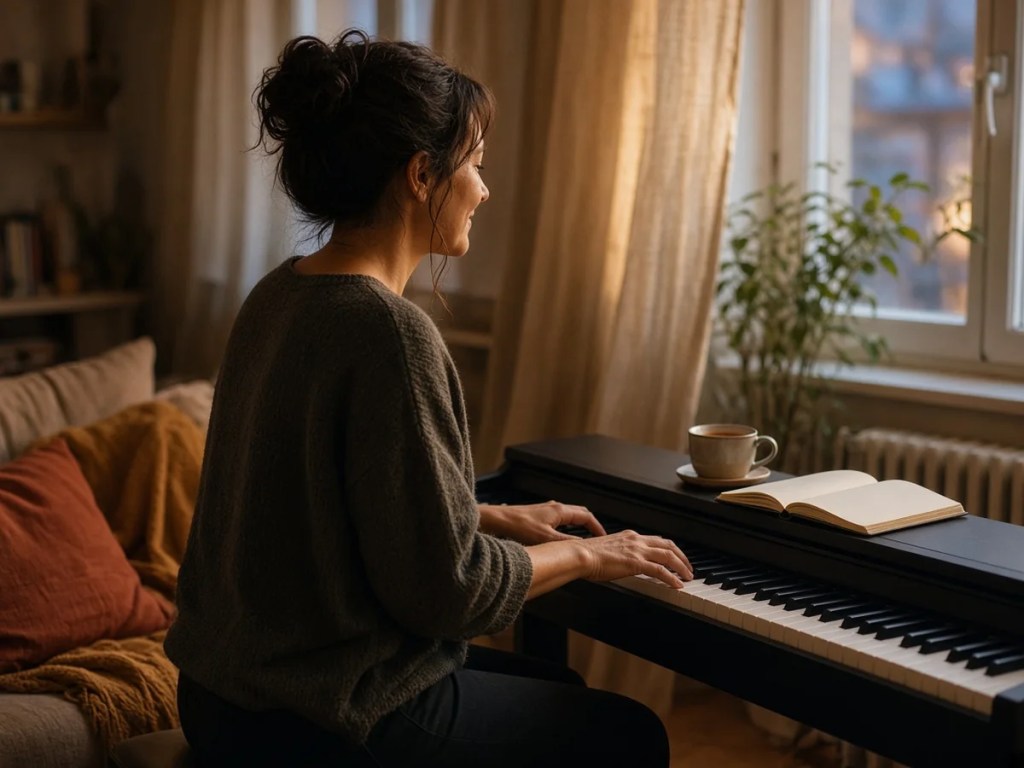
So yes, you can learn piano as an adult at home. The adults who stick with it usually do three things: they start with chords and rhythm instead of endless scales, they practise a little every day rather than a lot once a week, and they follow one clear method instead of hopping between random videos. This guide shows you how to do all three, starting tonight.
Is it too late to learn piano as an adult?
No. And you have a few advantages a ten-year-old doesn’t.
- You choose the music. Nobody forces you through pieces you don’t care about, and wanting to play a song is the best motivation there is.
- You understand patterns. Adults quickly see that a chord is a shape you can move around the keyboard. That “aha” moment speeds everything up.
- You can plan. You know your own week, so you can build practice into it on purpose.
What adults usually lack is time and patience with slow, dry beginnings. That’s exactly why the order in which you learn matters so much.
Why starting with chords helps you learn piano as an adult sooner
Traditional lessons often start with reading notes, one at a time. It works, but it can take months before anything sounds like “real” music, and that is where many adult beginners quietly give up.
A chord-first approach flips it round. Your left hand plays one note, your right hand plays three, and suddenly the piano sounds full. Reading music still comes, just a little later, when it has something to attach to.
C = C–E–G · G = G–B–D · Am = A–C–E · F = F–A–C
Hold each one for four slow counts, in that order, and loop it. Congratulations: that is the backbone of countless pop songs.
A 10-minute practice plan to learn piano at home
Ten focused minutes a day beats one long, tired session at the weekend. Here’s a simple routine so you never waste time wondering what to do:
- Warm up with something you know (2 minutes). Yesterday’s chords or a tiny tune. It gets your fingers moving and your confidence up.
- Learn one new thing (5 minutes). One chord change, one rhythm, or four bars of a song. Play slowly. Speed comes later.
- Repeat only the tricky bit (2 minutes). Don’t restart the whole song when you slip. Loop the two notes or the one chord change that trips you up.
- Finish with a win (1 minute). End on something you can play well. It makes tomorrow’s session far easier to start.
Tie your practice to something you already do every day, such as straight after dinner or before your evening coffee, and put a tick on a calendar each time. A chain of ticks is surprisingly hard to break.
What you need to learn piano at home
- A keyboard with full-size keys. 61 keys is enough to start. If you can, choose 88 weighted keys: they feel closer to a real piano and you won’t outgrow them.
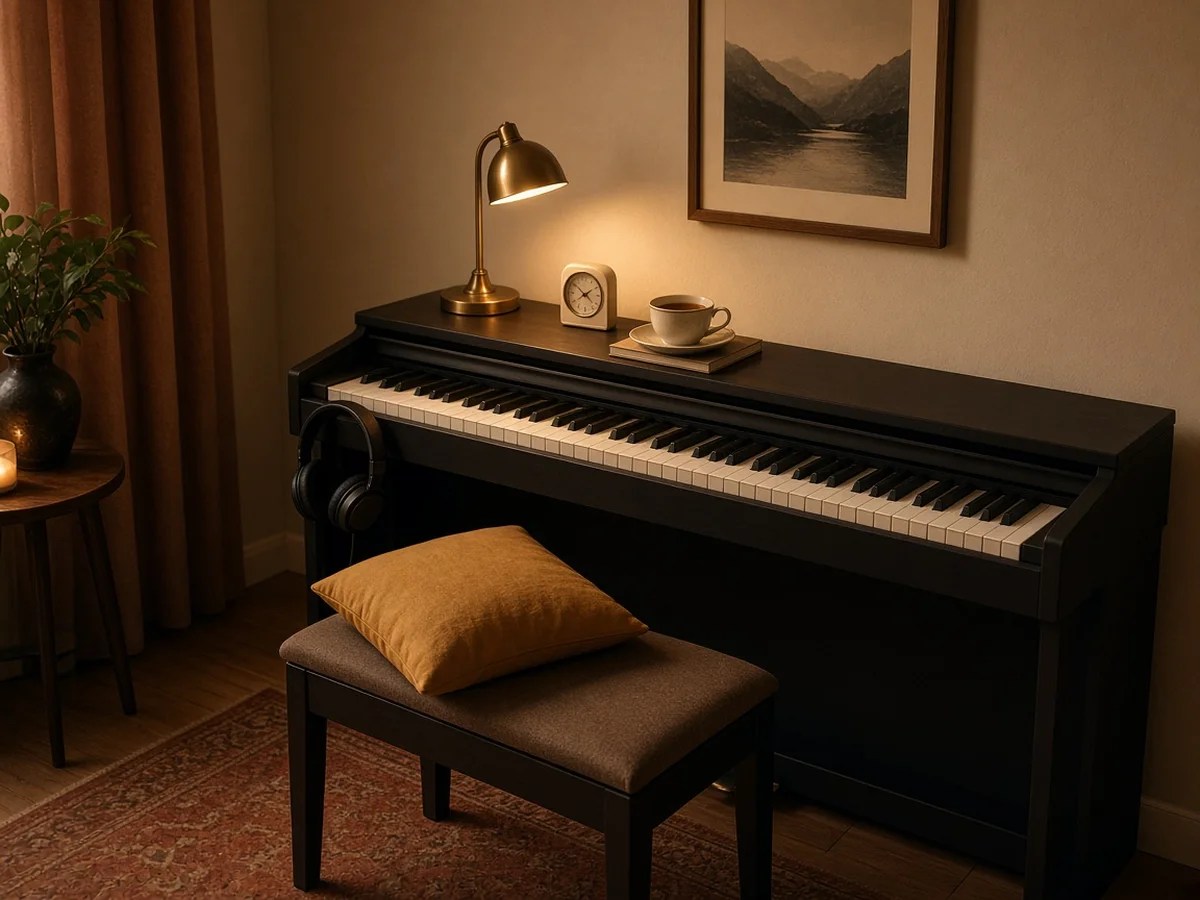
- Headphones. The secret weapon of anyone living in a flat. Practise at 10 pm without a single complaint from the neighbours.
- A sustain pedal. Cheap and makes simple chords sound lush.
- A chair at the right height. Forearms roughly level with the keys, shoulders relaxed, feet flat on the floor.
- One structured method. A course, a book or a teacher. Pick one and give it a fair few weeks.
Course, app or teacher: how to learn piano as an adult
| Option | How you pay | Best for | Watch out for |
|---|---|---|---|
| One-off online course | Once | Learning at your own pace, any time of day | Nobody checks your hand position live |
| Subscription app | Monthly or yearly | Game-style feedback on notes | Costs keep running while you use it |
| Private teacher | Per lesson | Personal feedback, exams, classical goals | Fixed times and the highest cost over a year |
If you want to play songs you love, on your own schedule, without a monthly bill, a well-built one-off course is a very sensible place to start. That brings us to the one we recommend.
Pianoforall: a play-first course for adults learning piano
Pianoforall is an online piano course created by piano teacher Robin Hall, who, according to the course website, has more than 30 years of teaching behind him. Its whole philosophy matches everything above: chords and rhythm from the very first lesson, real songs straight away, and reading music learned alongside what you’re already playing.
The course moves step by step through a surprisingly wide range of styles:
- Party-style rhythm piano with popular rhythm patterns and classic chord progressions
- Blues and rock ’n’ roll grooves you can use for hundreds of songs
- Ballads and improvisation, so you can create your own melodies
- Chord inversions and “speed learning” exercises to change chords quickly
- Jazz made easy, then classical pieces once you’re reading music
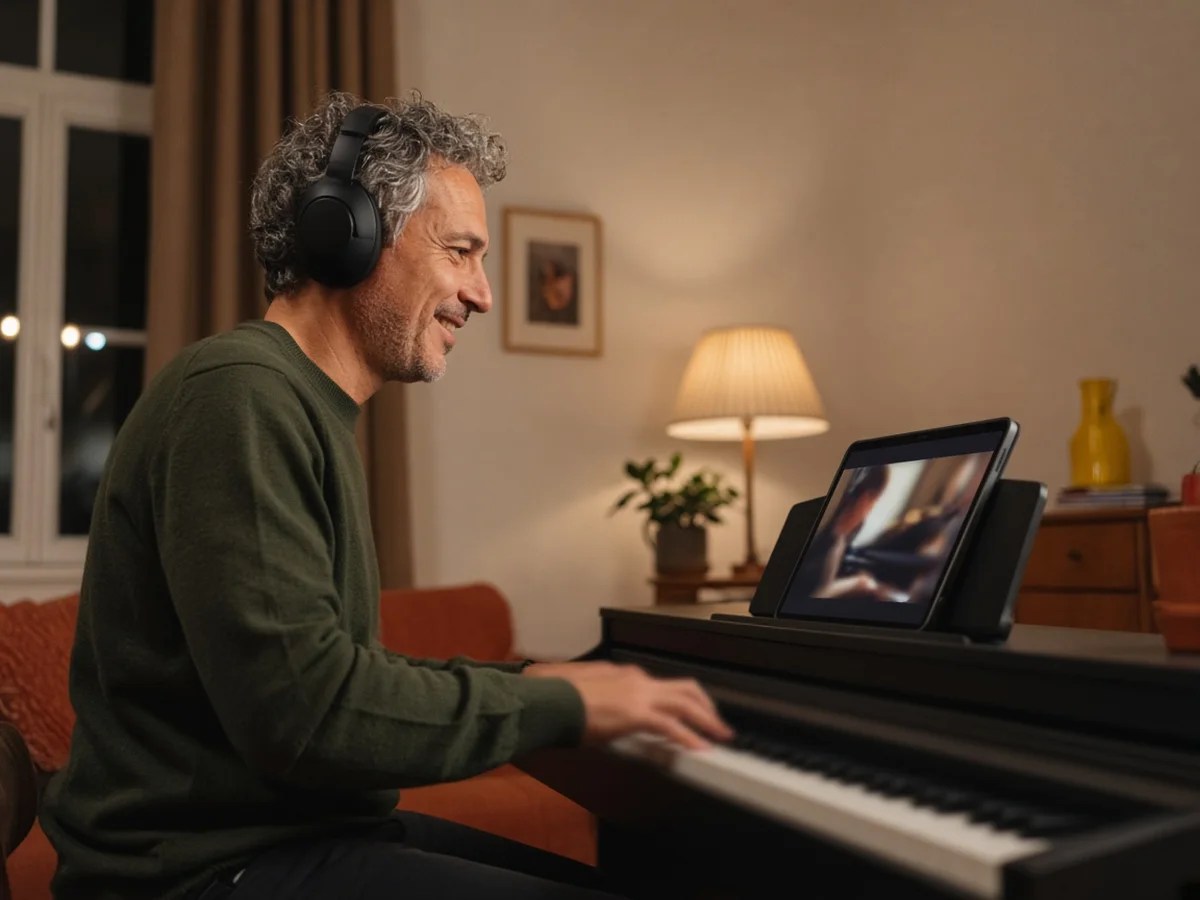
You learn in an online course player that saves your progress on phone, tablet or computer, and you can also download the lessons as ebooks with embedded video and audio, so you can practise offline. There’s a student community for questions too.
| Course | Key benefit | What you get | Our score | Price | |
|---|---|---|---|---|---|
| Editor’s pick Pianoforall |
Play real songs early, with chords before scales | Video lessons, online course player, offline ebooks, community, lifetime access | 4.5/5Price, guarantee and fit for adult beginners | One-off payment, see the price | Get Pianoforall here |
Why it’s our pick: it follows the play-first order that keeps adults motivated, costs a single payment and gives you 90 days to decide.
On 20 November 2026 the course was listed at US$49 as a one-off payment (shown as reduced from US$79), with lifetime access and a 90-day money-back guarantee. The website says more than 500,000 students in over 100 countries have taken it. Prices can change, so check the official page before you buy.
Who will love it
- Complete beginners and “I had lessons as a kid” returners
- Anyone who’d rather play songs than drill exercises
- People who want to learn in the evening, with headphones, at their own pace
- Anyone tired of monthly subscriptions
Who might prefer something else
- If you’re aiming for graded classical exams, a teacher and a notation-first method will suit you better.
- If you need someone to watch your hands and correct you live, add a few lessons with a local teacher.
Pros
- One payment, no subscription
- Real music from the first lessons
- Wide range: pop, blues, jazz, classical
- Works online and offline
- 90 days to change your mind
Cons
- Listed in US dollars, so the amount in euros depends on the exchange rate
- No live feedback on your technique
- Lessons are in English
- Classical exam goals need a different route
Frequently asked questions
How long does it take to learn piano as an adult?
It depends on your goal and how regularly you practise. With short daily sessions, simple chord accompaniments are realistic within the first weeks. Reading music fluently and playing more complex pieces takes months, and that’s perfectly normal.
Can I learn piano on a 61-key keyboard?
Yes. 61 keys covers everything a beginner needs. If you buy new and can stretch the budget, 88 weighted keys feel closer to an acoustic piano and will last you for years.
Can I learn piano without reading music?
You can start without it. Chords and patterns get you playing quickly, and many adults then pick up reading naturally because they already know how the music should sound.
How much should I practise each day?
Ten to twenty focused minutes is a great target for a beginner. Consistency matters far more than long sessions.
Is Pianoforall a subscription?
No. When we checked on 20 November 2026, it was a single payment with lifetime access and a 90-day money-back guarantee.
Can I buy it from Europe?
Yes. It’s a digital course you use online or download, so it works anywhere. Checkout is handled by ClickBank, the official retailer, and the price is listed in US dollars.
Your first song is closer than you think
Play the four chords above tonight. If you enjoy that feeling and want a clear path from there to blues, ballads and even classical pieces, take a look at Pianoforall. You have 90 days to see if it’s for you.
Course details and price checked on the official Pianoforall website on 20 November 2026.
Smart Little Guides is made in Luxembourg. Read more about Smart Little Guides if you want to know who writes these guides.


Leave a Reply