
Friendly heads-up: this guide contains affiliate links. If you buy through them, Smart Little Guides may earn a small commission, at no extra cost to you.
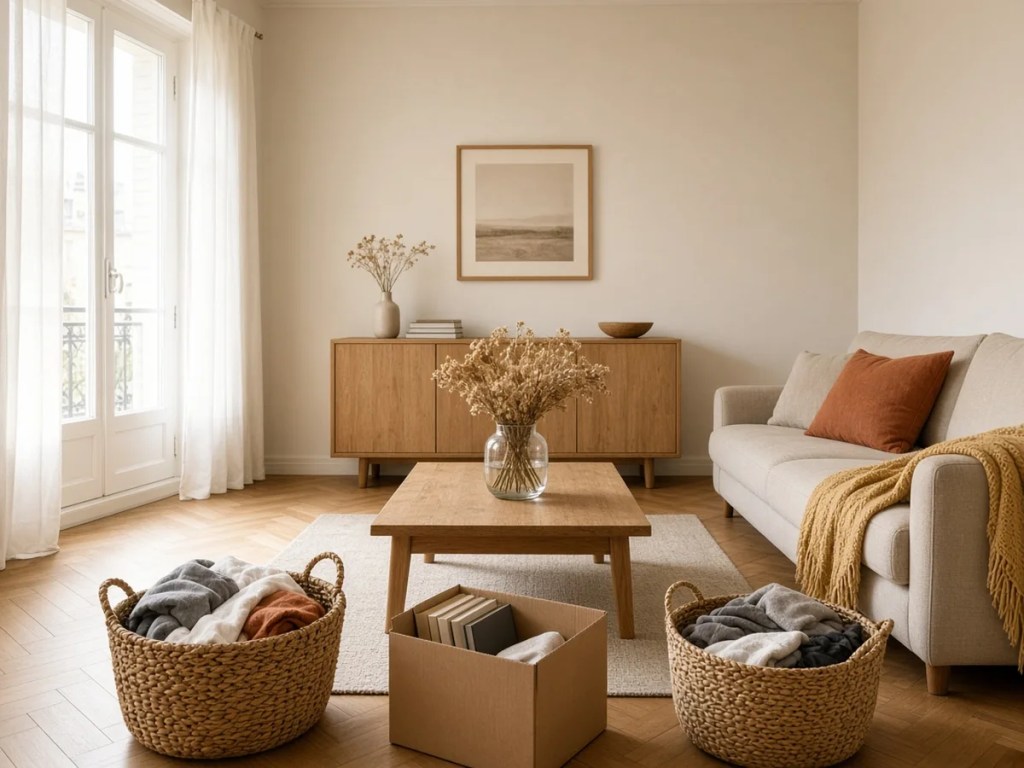
Ever opened a cupboard “just to tidy it quickly” and an hour later the floor was covered and the cupboard still wasn’t done? That isn’t a lack of willpower. It’s a starting-point problem, and it’s very easy to fix.
The short answer to “how do I declutter my home?” is this: start with one tiny area, not a whole room, sort with a few simple boxes, give every item you keep a home, and get everything else out of the house within 24 hours. Do that once and you’ll feel the difference immediately. Do it a few times a week and your home changes. Here’s the step-by-step plan.
Why decluttering your home feels so exhausting
Every object you pick up asks you a question: keep it? Where does it go? Will I need it one day? Clutter isn’t really about stuff, it’s about hundreds of small decisions you’ve postponed.
That’s why “do the whole kitchen this Saturday” rarely works. You run out of decision energy long before you run out of things. The trick is to make each session small enough to finish.
The step-by-step method to declutter your home
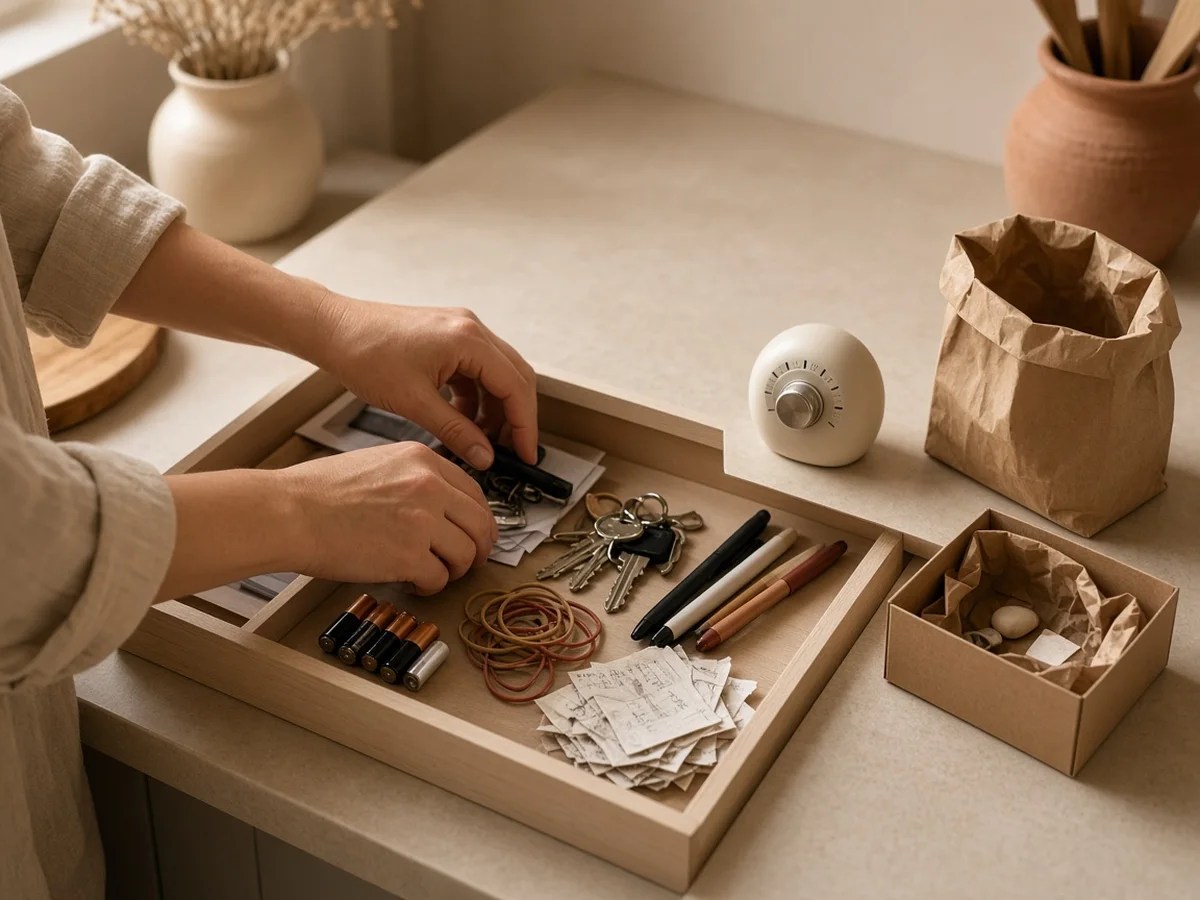
- Pick one micro-zone. A kitchen drawer, the bathroom shelf, your bedside table, the hall console. Not “the bedroom”. Small enough to finish in 15 minutes.
- Set up four containers. Keep, Donate or sell, Recycle or bin, and a basket for things that live in another room. Having a place for every decision stops the “I’ll decide later” pile.
- Empty the zone completely. Take everything out and group similar things together. You’ll often discover you own four tape measures.
- Decide, quickly. For each item, ask: Have I used it in the last year? Would I buy it again today? Do I have a better one? If the answer is no, it goes.
- Give every keeper a home. Put things back where you’d naturally look for them, most-used at the front. A home for each item is what keeps it tidy later.
- Do the exit step. Bin bag out to the bin, donation box straight into the car or by the front door, the “other room” basket emptied. Today, not next week.
Which room to declutter first
Start where decisions are easy and finish where they are emotional:
- Bathroom: expired products and empty bottles. Almost no hard choices.
- Kitchen drawers and the fridge: fast, visible results you’ll enjoy every day.
- Entrance and hallway: shoes, bags and keys. Your home feels calmer the second you walk in.
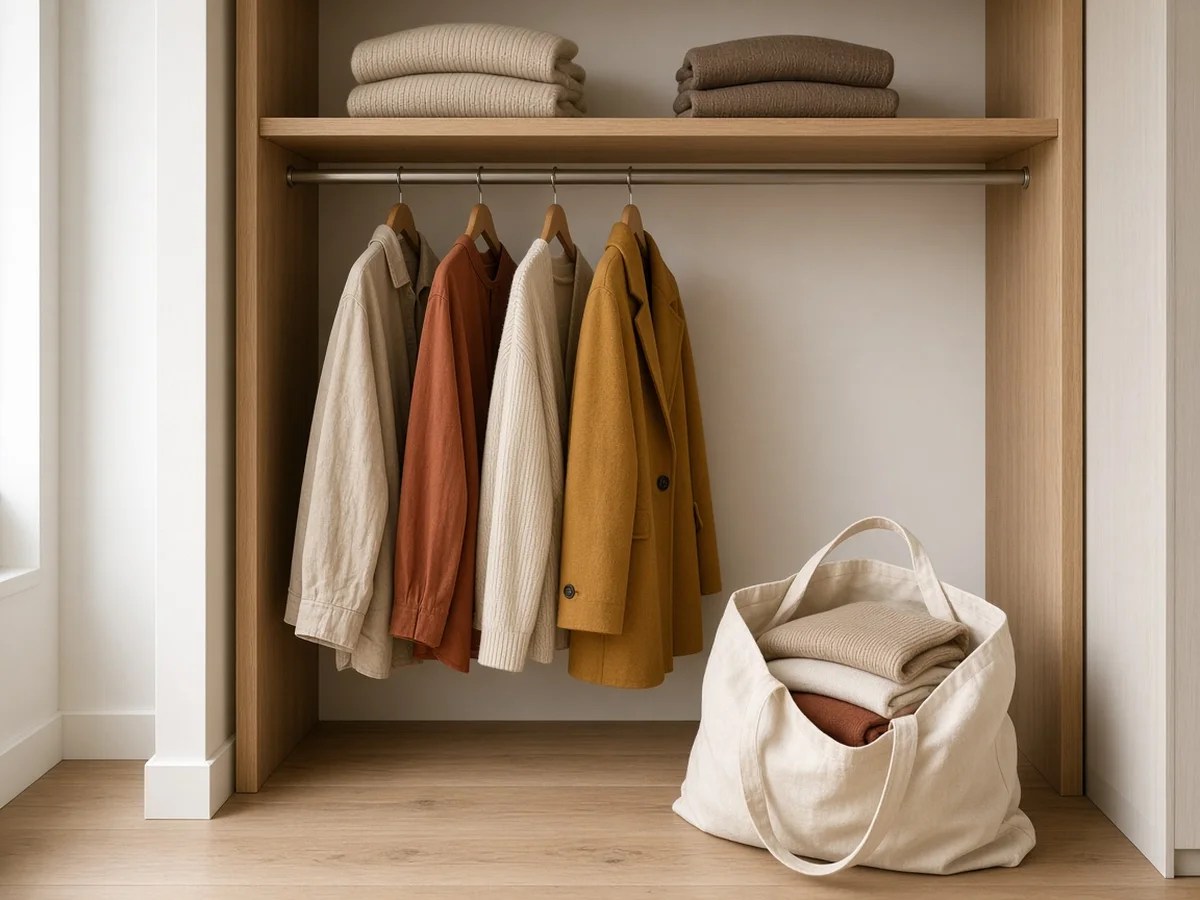
- Wardrobe: keep what you actually wear and what fits now.
- Papers: sort into “to do”, “to keep” and “to shred”. For the important ones, our family emergency binder checklist shows exactly what to keep together.
- Sentimental items, last of all: by now your “letting go” muscle is much stronger.
Where should the stuff go when you declutter?
The donation box that sits in the hallway for three months is just clutter with a label. Plan the exit before you start:
- Donate: charity shops, local second-hand stores, clothes collection containers.
- Sell: Vinted for clothes, local marketplaces and Facebook Marketplace for furniture and household items. Give it two weeks. If it hasn’t sold, donate it.
- Recycle properly: old batteries, bulbs and small electronics go to collection points, which many supermarkets and DIY shops have. Your local recycling centre takes the rest. In Luxembourg, SuperDrecksKëscht collects problem products such as paint and chemicals.
How to keep clutter from coming back after you declutter
- One in, one out: a new jumper arrives, an old one leaves.
- A donation bag in the wardrobe: the moment something doesn’t fit, it goes straight in.
- A 10-minute evening reset: everything back in its home before bed. Our free evening routine checklist has a simple bedroom check-in you can print. Tomorrow morning you’ll thank yourself.
- Clear surfaces: worktops, tables and the hall console are clutter magnets. Keep them almost empty and the whole room looks tidier.
Want a complete system to declutter your home? Try this guide
If you like the idea of a ready-made plan that tells you what to do next, Declutter Fast by Mimi Tanner is a friendly online guide that has been helping readers since 2006, according to its author. Mimi is open about not being a professional organiser: she describes herself as a former packrat who tried every method, and wrote down what finally worked for her.
Inside, you’ll find:
- a one-day decluttering method for when you want a big reset;
- a gentle four-pass method that goes through your home in rounds, so you never feel stuck;
- an emergency plan for when guests are arriving and the clutter has to disappear now;
- clear ways to organise papers and clothes;
- a five-minute trick for procrastination on the days you can’t get started;
- the 17 categories every home needs a place for.
It’s fully online, so you can log in and start straight after paying, and it’s yours to keep. On 20 November 2026 the official order page listed it at US$22.97 as a one-time payment.
| Guide | Key benefit | What you get | Our score | Price | |
|---|---|---|---|---|---|
| Editor’s pick Declutter Fast |
A clear plan so you always know what to tackle next | Online guide: one-day and four-pass methods, papers, clothes, procrastination tips | 4.3/5Price, scope and ease of use | One-time payment, see the price | Get Declutter Fast here |
Why it’s our pick: it’s affordable, quick to read and focused on action rather than theory.
Who it’s perfect for
- Anyone who feels overwhelmed and doesn’t know where to begin
- People who have read the theory but need a push to act
- Busy households that want results in short sessions
- Anyone preparing for a move, a new baby or guests
Who might prefer something else
- If you want a strict minimalist philosophy, a dedicated minimalism book may suit you better.
- If you need hands-on help with a whole house, a local professional organiser is the faster route.
Pros
- Low, one-time price
- Instant online access
- Several methods for different moods and time frames
- Covers the hard parts: papers and clothes
Cons
- Written for an American audience, so some examples feel US-centric
- A warm, cheerleading style: great for motivation, less so if you prefer dry checklists
- Online only, no printed book
- Listed in US dollars
Frequently asked questions
Where should I start decluttering?
With the smallest, easiest space you can finish in 15 minutes, like a bathroom shelf or one kitchen drawer. A quick win gives you the energy for the next one.
How long does it take to declutter a whole home?
It depends on the size of your home and how much you own. Short daily sessions of 15 to 30 minutes usually get a flat into shape in a few weeks, without wearing you out.
What if I feel guilty getting rid of things?
Remember that donating gives an item a second life with someone who will use it. Keeping it in a cupboard doesn’t honour the gift or the money you spent.
What should I do with sentimental items?
Leave them until last. Choose a set space, such as one box, and keep the pieces that mean the most. Take photos of the rest before letting them go.
How do I declutter when my family isn’t on board?
Start with your own things and shared spaces. Results are contagious: a clear hallway often convinces people faster than any discussion.
Is Declutter Fast a subscription?
No. When we checked on 20 November 2026, it was a one-time payment with online access you keep.
Start with one drawer tonight
Set a 15-minute timer, empty one drawer and enjoy the feeling of a space that’s finally done. If you want a full plan to carry you through the rest of your home, have a look at Declutter Fast.
If the papers you kept include bills and debts you need to see clearly, the Budget and Debt Workbook puts them on one page.
Guide details and price checked on the official website on 20 November 2026.


Leave a Reply